
Beer is a fermented drink made from grain
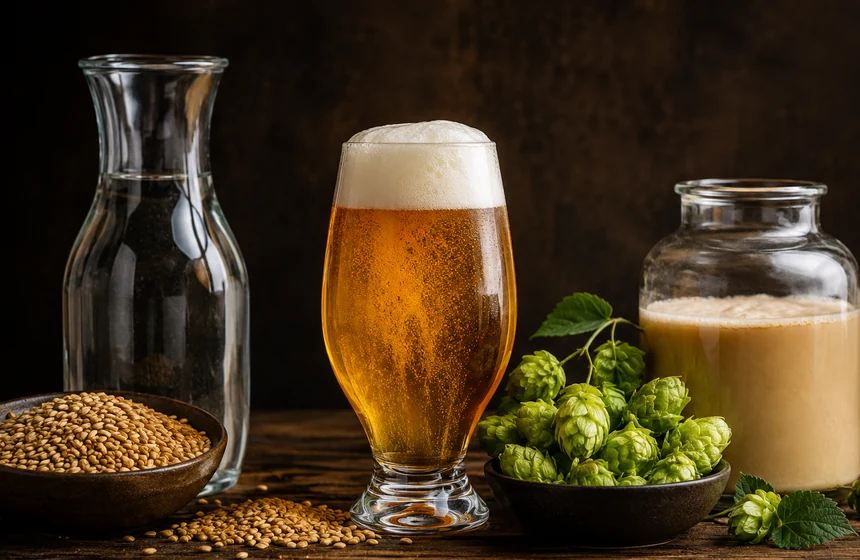
Beer is made by extracting sugars from grain, flavouring the liquid, then letting yeast ferment those sugars. Water forms most of the drink. Malted grain supplies colour, body and the sugars needed for fermentation. Hops usually bring bitterness, aroma and flavour. Yeast turns sugars into alcohol and carbon dioxide while creating flavours of its own.
That is the clean answer. The useful caveat is that beer is not restricted to one rigid four-item recipe. Brewers may use wheat, oats, rye, rice, maize, sugar, fruit, spices, coffee, cocoa and many other ingredients. Water, malt, hops and yeast are the familiar foundations of modern beer, not a compulsory shopping list for every bottle ever brewed.
The remarkable bit is how far those foundations can stretch. A pale, dry pilsner; a soft wheat beer; a sharp fruit sour; a bitter IPA; and a black, roasted stout are all recognisably beer.
What does each ingredient actually do?
Water
Water makes up most of the finished beer. Its mineral composition can affect mash chemistry and influence how soft, crisp, rounded or assertive a beer tastes, but it is not a magic flavouring powder. Brewers usually treat water carefully to suit the beer they want to make.
Malt and grain
Malted barley is the classic base. It supplies starch that can be converted into fermentable sugars, plus proteins, colour and flavour. Pale malt may taste bready or biscuity. Darker and roasted grains can suggest toast, caramel, cocoa or coffee.
Hops
Hops are the cones of the hop plant. Their resins and oils can contribute bitterness, aroma and flavour, ranging from floral and herbal to citrus, pine, spice and tropical fruit. Timing matters as much as variety.
Yeast
Yeast is the living part of the process. It consumes fermentable sugars and produces alcohol and carbon dioxide. It also makes many flavour compounds, which is why two beers with similar malt and hops can still taste strikingly different.
The point where ingredients turn into a drink
Brewing prepares a sugary, hop-flavoured liquid called wort. Fermentation turns that wort into beer.
The brewer mills malt, mixes it with warm water so enzymes can convert starch into sugars, separates the sweet wort from the grain, then boils the wort and usually adds hops. After cooling, yeast is added. Fermentation produces alcohol, carbon dioxide and a large share of the beer's aroma and flavour.
After fermentation, the beer may be conditioned, filtered, carbonated or left with live yeast, depending on the style and how it will be packaged. Our step-by-step guide to how beer is made follows the whole journey.
Are ale and lager both beer?
Yes. Ale and lager are broad beer families. The distinction is mainly about yeast and fermentation practice, not whether the beer is pale, dark, weak, strong, fizzy or flat.
Ale fermentation is commonly warmer and can show more fruity or spicy yeast character. Lager fermentation is commonly cooler and followed by cold conditioning, often producing a cleaner profile. Those are useful tendencies, not laws of nature. Modern brewers happily blur the edges, and many traditional beers refuse to fit into a tidy two-box diagram.
Colour tells you less than you think
A dark lager is still a lager. A pale ale is still an ale. Grain colour changes appearance and roasted flavour, while alcohol strength depends mainly on the amount of fermentable extract and how completely the yeast ferments it.
For the longer answer, see ale versus lager.
Why can beer taste like fruit, coffee or bread?
Beer can suggest flavours that were never added as ingredients. Malt can create bready, biscuit, caramel, toast, chocolate and coffee-like notes. Hop varieties can smell of flowers, herbs, resin, citrus or fruit. Yeast can produce esters and phenolic compounds that remind people of banana, pear, pepper or clove.
Then the process joins in. Fermentation temperature, oxygen exposure, conditioning time, carbonation, freshness and serving temperature all affect what you perceive. A beer recipe matters, but the brewer's control of the process matters just as much.
“Real beer has only four ingredients”
Water, malted barley, hops and yeast are the classic teaching model and the basis of a huge amount of beer. They are not a universal purity test. Many respected beer traditions use wheat, oats, rye, unmalted grain, sugar, fruit, herbs or spices. Ingredients are only useful when they help make the intended beer.
Beer is fermented grain, shaped by ingredients and process.
The basic idea is simple. The variety comes from what brewers choose, when they use it and how they look after fermentation.
What people usually ask next
Is beer always made from barley?
No. Barley is the most common brewing grain, but beer can also use wheat, oats, rye, rice, maize and other cereals, either malted or unmalted.
Does beer have to contain hops?
Most modern beer contains hops, but the broader history of fermented grain drinks includes beers flavoured with other plants. On a modern beer label, hops are the normal expectation.
Are ale and lager different drinks?
They are both beer. Ale and lager are broad fermentation families, mainly distinguished by yeast and fermentation practice rather than colour or strength.
Is dark beer stronger than pale beer?
No. Colour mainly comes from the grains and how they were kilned or roasted. Strength depends on how much fermentable material is available and how fermentation proceeds.
Where this lesson comes from
The explanation above is written for ordinary drinkers. These sources support the ingredient, fermentation and beer-family details.