
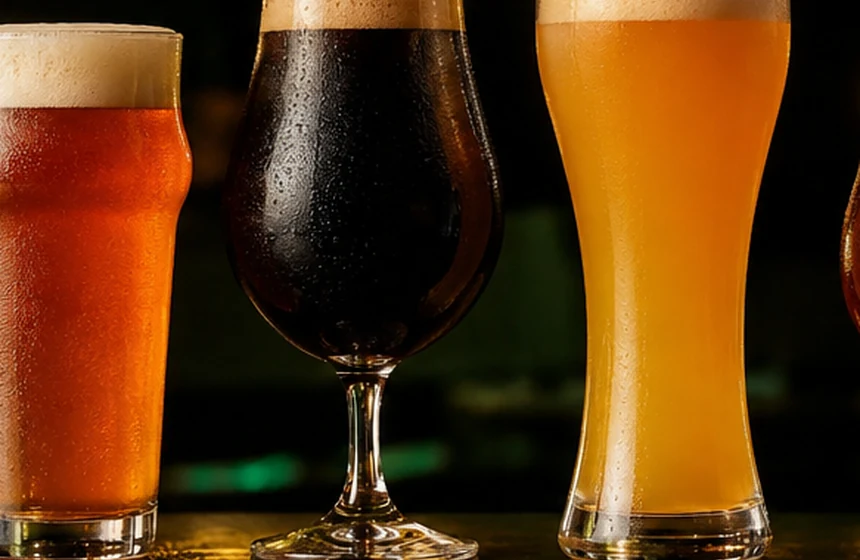
Porter
Often expected to be softer, chocolate-led and dark brown to black.
Stout
Often expected to be more roasted, coffee-like and black.
What is the difference between porter and stout?
There is no universal modern dividing line. Porter and stout share history, ingredients and flavours. Stout often suggests more roast and a drier finish, while porter often suggests chocolate, toast and softer malt, but breweries regularly cross that boundary.
CAMRA itself notes considerable crossover and judges some strong porter and stout categories together. The label is therefore a useful clue, not a guarantee.
Porter versus stout comparison
| Colour | Porter: dark brown to black. Stout: commonly deep brown to black. |
|---|---|
| Expected roast | Porter: often softer, toasted or chocolate-led. Stout: often more coffee-like, charred or sharply roasted. |
| Sweetness | Either can be dry, balanced or sweet. |
| Strength | Either can be sessionable or very strong. |
| Reliable distinction? | No single ingredient, colour or alcohol threshold works for every modern beer. |
Why are the names so tangled?
Porter emerged in London and became one of the great industrial beer styles. The word stout was originally an adjective meaning strong. Stronger porter could therefore be described as stout porter, and the shortened word eventually became a style name in its own right.
Modern brewers revived both names after periods of decline. They did not all adopt the same dividing rule, which is why the overlap remains.
What should you expect?
A porter may suggest cocoa, brown bread, caramel, nuts and gentle roast. A dry stout may suggest espresso, bitter chocolate and a firmer roasted finish. Milk stout can be sweet and creamy. Imperial porter can be every bit as dark, strong and complex as imperial stout.
The brewery's own tasting description is often more useful than the style word alone.
Choose by the roast level you want
Choose porter when
You are looking for softer chocolate, toast, caramel or dark bread, with less expectation of an espresso-like edge.
Choose stout when
You want stronger roast, coffee or bitter chocolate, or a recognised substyle such as dry, milk, oatmeal or imperial stout.
Food pairing differences
Porter works beautifully with roast pork, sausages, mushrooms, smoked cheese and chocolate. Stout is a classic partner for oysters, beef stew, barbecue, blue cheese and cocoa-rich desserts. Strong versions of either style suit slow sipping with mature cheese.
Porter versus stout FAQ
Is stout just a strong porter?
Historically, stout could mean a stronger porter. Modern brewery labels have developed in different directions, so that rule is no longer reliable.
Is porter always sweeter than stout?
No. Porter is often perceived as softer or more chocolate-led, but either style can be dry or sweet.
Does stout always use roasted barley?
Roasted barley is strongly associated with many stouts, but recipes and commercial labels vary.
Which is darker?
Stout is often black and porter may be dark brown to black, but colour alone cannot identify the style.